
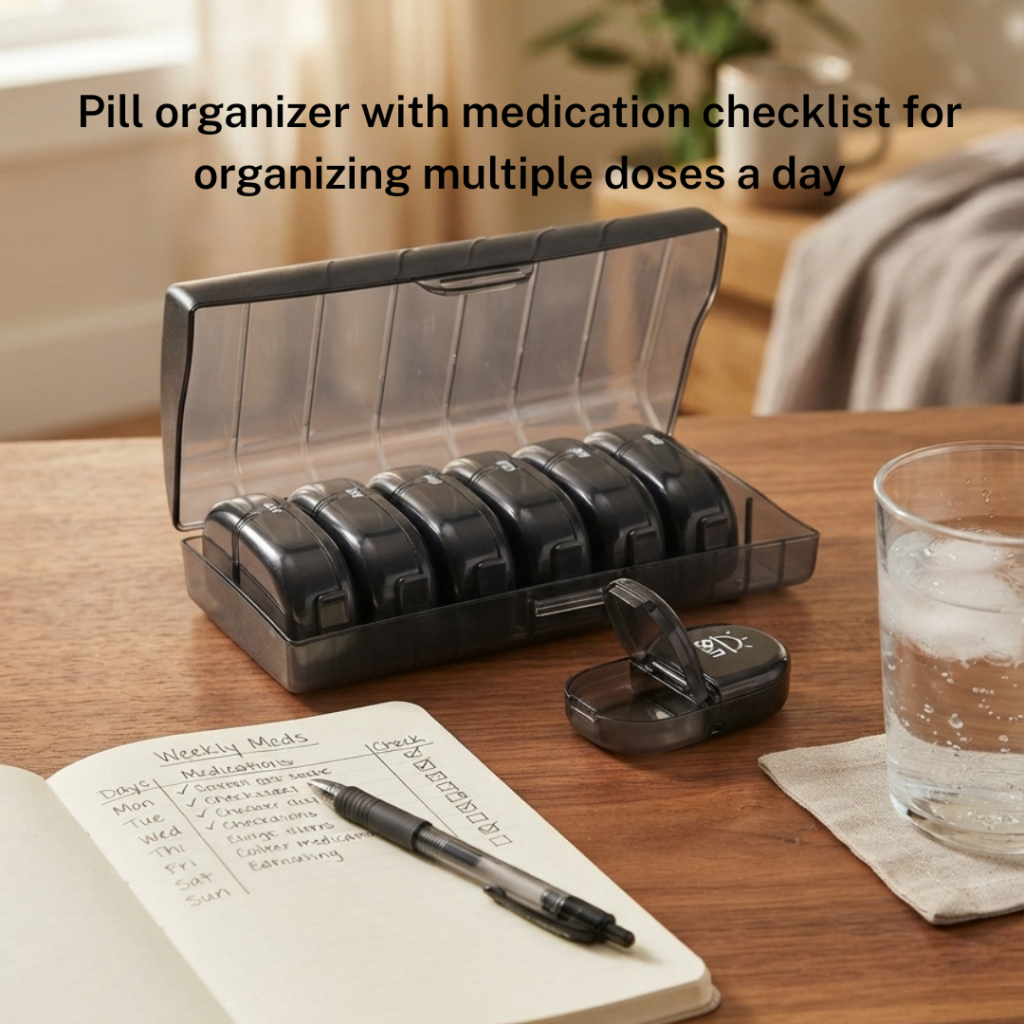
Learning how to organize medications with multiple doses a day can make your routine easier, safer, and less stressful.
Managing medications with multiple doses a day can feel overwhelming, especially when you are balancing prescriptions, vitamins, supplements, or care routines for a loved one. Morning, afternoon, evening, and bedtime doses can quickly become confusing if there is no clear system in place.
If you have ever looked at a bottle and wondered, “Did I already take this dose, or did I only think about taking it?” you are not alone.
Many people struggle to take medications exactly as directed, especially when they have multiple prescriptions, supplements, or different dose times throughout the day. A simple organization system can make your daily routine easier to follow and help reduce confusion.
Important note: This article is for general organization tips only and is not medical advice. Always follow your doctor’s or pharmacist’s instructions for how and when to take your medications.
A clear medication routine can help you feel more organized, more confident, and less stressed throughout the day. This step-by-step guide will help you create a simple system for organizing medications with multiple doses a day.
Step 1: Create a Medication Master List
Before filling a pill organizer, start with one clear list of everything you take.
Choose a clean table or counter space and gather your prescription bottles, over-the-counter medications, vitamins, and daily supplements. Then create a simple master list on paper, in a notebook, or on your phone.
Your list should include:
- Medication or supplement name
- Strength or dosage amount
- How often you take it
- Time of day you take it
- Special instructions, such as “take with food” or “take before bedtime”
This list helps you see your full routine in one place. It can also be useful during doctor appointments, pharmacy visits, or when a caregiver is helping with your medication routine.
Keep the list updated whenever your doctor or pharmacist changes your instructions.
Step 2: Choose the Right Pill Organizer
If you take medications only once a day, a simple weekly pill box may be enough. But if you take pills multiple times a day, you may need a more organized system.
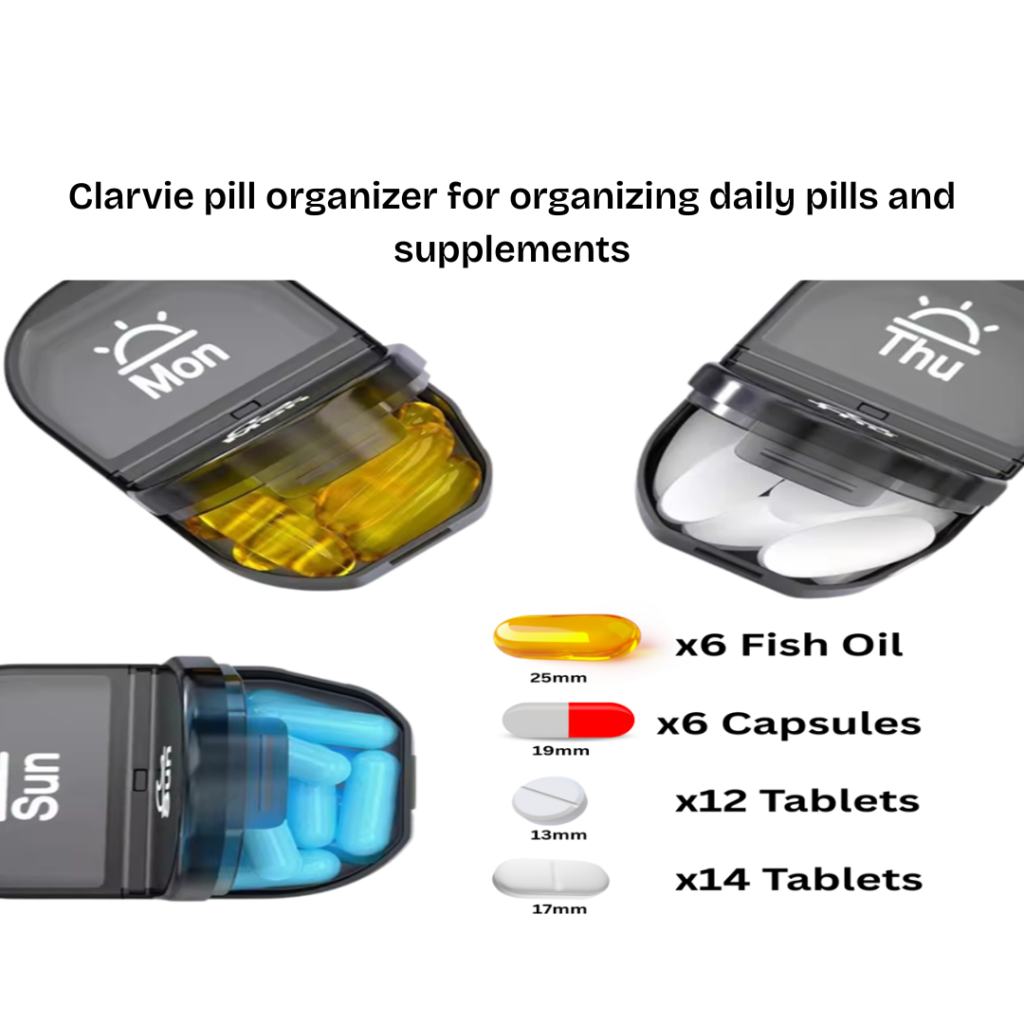
Look for a pill organizer that makes it easy to separate different dose times, such as morning, afternoon, evening, and bedtime. A good organizer should be easy to open, clearly labeled, and large enough to hold your daily pills without forcing them into small compartments.
A well-designed pill organizer can make your routine easier by keeping your pills separated, visible, and easier to check. Clarvie pill organizers are designed to support simple daily routines at home, at work, and while travelling.
Product Image
When choosing a pill organizer, look for features such as:
- Clear day labels
- Secure lids
- Easy-open compartments
- Enough space for larger vitamins or supplements
- A compact design for home, office, or travel use
- BPA-free material for everyday storage
The right organizer should make your routine feel easier, not more complicated.
Step 3: Set Up a Weekly Sorting Routine
The best way to stay consistent is to choose one day each week to organize your pills. For many people, Sunday morning or Sunday evening works well because it prepares the full week ahead.
Try to fill your organizer when you are not rushed or distracted. Choose a quiet time, wash your hands, clean your workspace, and keep your master list nearby.
A safe weekly routine can look like this:
1. Clean your space first
Start with a clean table or counter. Wash and dry your hands before handling pills. Keeping the area clean helps protect your medications and makes the sorting process feel more organized.
2. Sort one medication at a time
Open only one bottle at a time. Place that medication into the correct compartments for the week, then close the bottle before moving to the next one.
This helps reduce mistakes because you are not mixing multiple bottles at once.
3. Follow special instructions carefully
Some medications may need to be taken with food, without food, at bedtime, or separately from other medications or supplements. Always follow the instructions from your doctor, pharmacist, or medication label.
If you are unsure whether two medications or supplements can be taken together, ask your pharmacist before placing them in the same compartment.
4. Double-check before closing the organizer
After filling the organizer, compare each compartment with your master list. For example, if Monday morning should have three pills, check that the Monday morning section has exactly three pills.
This final check can help you feel more confident about your weekly routine.
Step 4: Use Habit Stacking to Remember Your Doses
A pill organizer is helpful, but it works best when it becomes part of your daily routine. One easy method is called habit stacking. This means connecting your medication time with something you already do every day.
For example:
| Dose Time | Daily Habit | Helpful Placement |
|---|---|---|
| Morning | Brushing your teeth or making coffee | Bathroom counter or kitchen counter |
| Afternoon | Eating lunch or checking your bag | Work desk, lunch bag, or kitchen table |
| Evening | Eating dinner or cleaning the kitchen | Dining table or kitchen counter |
| Bedtime | Charging your phone or washing your face | Nightstand or bathroom shelf |
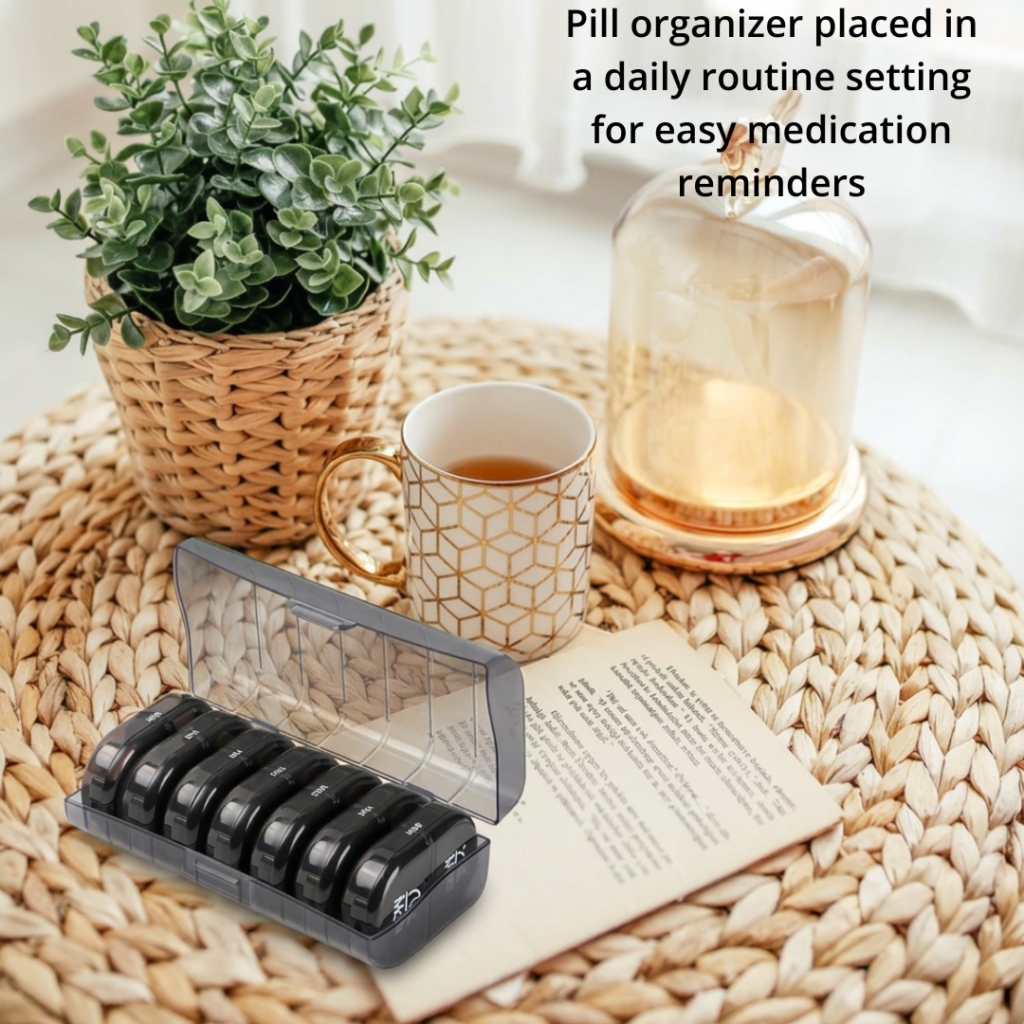
Try to keep your organizer in a place that matches your routine. When the pill organizer is easy to see and easy to reach, it becomes much easier to remember.
Lifestyle Image
For example, someone who takes morning vitamins may keep their pill organizer near their coffee station. Someone who takes bedtime medication may keep it near their nightstand, beside a glass of water.
The goal is to make your routine simple and natural.
Step 5: Plan Ahead for Refills
A pill organizer can also help you notice when you are running low.
Each week, while filling your organizer, check your medication bottles. If one bottle has less than a week’s supply remaining, it may be time to request a refill from your pharmacy.
This step is especially helpful for people who take daily prescriptions, manage family medications, or support senior care routines.
You can also ask your pharmacist if they offer refill reminders or medication synchronization. Medication synchronization means your pharmacy may be able to align refill dates so multiple prescriptions are ready around the same time.
Planning ahead helps prevent last-minute stress and missed doses.
Step 6: Keep Your Pill Organizer Clean
Because pill organizers are used regularly, it is important to keep them clean and dry.
Before refilling your organizer, check for dust, residue, or broken pill pieces. If your organizer needs cleaning, follow the care instructions for your specific product. In general, many pill organizers can be gently washed with water and mild soap, then dried completely before use.
Make sure the organizer is fully dry before placing pills inside. Moisture can affect some medications, so dryness is important.
A clean pill organizer supports a cleaner and more comfortable daily routine.
Final Thoughts
Organizing medications with multiple doses a day does not have to feel stressful. With a simple master list, a good weekly sorting routine, and the right pill organizer, you can make your daily schedule easier to manage.
Whether you are organizing prescriptions, vitamins, supplements, or helping a loved one stay on track, a clear system can bring more peace of mind to your day.
Clarvie pill organizers are designed to support everyday routines with clarity, care, and confidence — at home, at work, and while travelling.
A few minutes of planning each week can make the rest of your week feel much easier.
Looking for a simple way to organize your weekly routine? Explore Clarvie pill organizers designed for everyday home, work, and travel use.